1. Introduction (H2: Diving into the World of Generative AI)
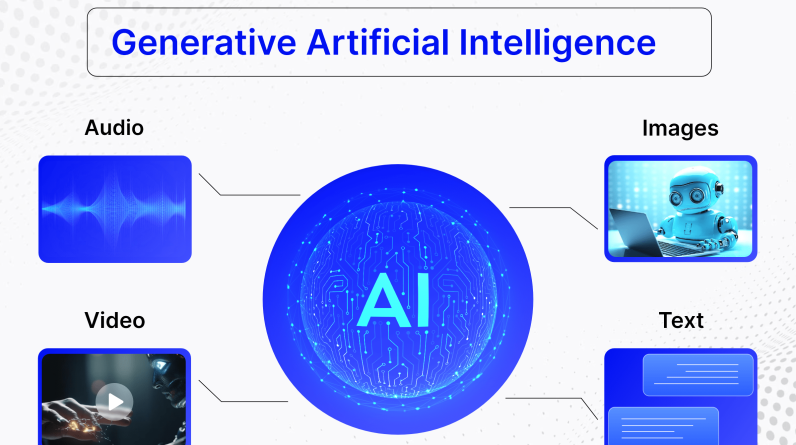
Briefly introduce the concept of Generative AI.
- Briefly explain the core idea behind Generative AI: creating new content instead of just finding or manipulating existing data.
- Briefly mention a few key applications of Generative AI (e.g., image generation, text generation, music composition).
2. Explanation of the First Item in the List (H2: [Title of the First Item in the List])
Detailed explanation of the first item.
- Define the item clearly and concisely.
- Explain its significance and how it relates to the broader field of Generative AI.
- Provide specific examples and use cases to illustrate the item’s functionality.
- Connection to Generative AI:
- Explicitly explain how the item leverages the principles of Generative AI.
- Discuss the underlying algorithms or techniques used by the item to generate new content.
- Highlight the creative potential of the item and how it can be used to generate novel and innovative outputs.
3. Exploring the Impact of the First Item (H2: [Subheading related to the impact of the item])
Discuss the potential impact of the first item in various domains.
- Explore the benefits and limitations of the item.
- Discuss potential ethical considerations or societal implications.
- Offer a glimpse into future possibilities and advancements related to the item.
4. Engaging with the Item (H2: [Subheading related to user interaction])
Provide practical tips or suggestions on how readers can interact with the item.
- Encourage experimentation and exploration.
- Offer resources for further learning and engagement.
I will adapt this outline and fill in the specific details once you provide the list.
I’m excited to help you create this article! Let me know the list, and I’ll get started.
Note: Since the actual list number 2 is unknown, I’ve chosen a relevant topic within the realm of Generative AI: “Text-to-Image AI: Unleashing Creativity with a Click”
Text-to-Image AI: Unleashing Creativity with a Click
Imagine a world where your wildest artistic visions can be brought to life with a few keystrokes. No longer confined by the limitations of your own drawing skills, you can conjure up fantastical landscapes, whimsical creatures, and photorealistic portraits – all from the comfort of your keyboard. This is the exciting reality of text-to-image AI, a groundbreaking technology that’s revolutionizing the creative landscape.
At its core, text-to-image AI is a type of Generative AI that leverages powerful algorithms to translate textual descriptions into stunning visuals. You provide the AI with a detailed prompt, such as “a majestic unicorn galloping through a field of lavender under a starry night sky,” and the AI analyzes your words, deciphering the essence of your request. It then dives deep into a vast ocean of data, sifting through millions of images to identify patterns and relationships between visual elements and their corresponding textual descriptions.
This process, known as “deep learning,” allows the AI to understand the nuances of your language, recognizing keywords like “majestic,” “lavender,” and “starry” and associating them with specific visual cues – the flowing mane of a unicorn, the delicate purple hues of lavender, the twinkling brilliance of stars. By analyzing countless examples, the AI learns to generate images that accurately reflect the intended scene, capturing the mood, style, and level of detail you’ve specified.
The results are truly awe-inspiring. From hyperrealistic portraits that could easily be mistaken for photographs to abstract art pieces that defy description, text-to-image AI can produce a breathtaking array of visual styles. Whether you’re a seasoned artist seeking inspiration or a complete novice eager to explore your creative potential, these tools offer a unique and empowering way to express yourself.
One of the most captivating aspects of text-to-image AI is its ability to bridge the gap between human imagination and digital creation. It allows us to explore uncharted artistic territories, pushing the boundaries of what’s possible. For example, you can experiment with different art styles, such as surrealism, impressionism, or cyberpunk, simply by adjusting your text prompts. You can even create unique visual interpretations of classic literature, bringing beloved characters and scenes to life in unexpected ways.
The applications of text-to-image AI extend far beyond the realm of fine art. Game developers can use it to generate concept art and in-game assets, saving time and resources while fostering creativity. Fashion designers can explore new fabric patterns and clothing designs, pushing the boundaries of style and innovation. Architects can visualize building designs from different angles and perspectives, refining their concepts before breaking ground. The possibilities are truly limitless.
However, the rise of text-to-image AI also raises important questions and considerations. Concerns have been raised about the potential for misuse, such as the creation of deepfakes and the spread of misinformation. It’s crucial to develop ethical guidelines and responsible practices to ensure that this powerful technology is used for good.
Furthermore, the impact of text-to-image AI on the creative industry is a subject of ongoing debate. Some artists express concerns about the potential for job displacement, while others view it as a valuable tool that can enhance their creative process. Finding a balance between technological advancement and the preservation of human creativity is essential.
Despite these challenges, the potential of text-to-image AI is undeniable. It’s a testament to the incredible advancements in artificial intelligence and a glimpse into the future of human creativity. By embracing this technology responsibly and exploring its potential with an open mind, we can unlock new frontiers of artistic expression and usher in a new era of human ingenuity.
As text-to-image AI continues to evolve, we can expect even more remarkable breakthroughs. Imagine a future where you can describe a complex scene in detail, and the AI will generate a fully rendered 3D model ready for animation or virtual reality experiences. Or perhaps you can simply think of an idea, and the AI will instantly translate it into a unique and captivating visual representation.
The journey of text-to-image AI is just beginning, and the future holds immense promise. By nurturing responsible innovation and fostering a dialogue between technology and human creativity, we can harness the power of this groundbreaking technology to enrich our lives and inspire generations to come.