:max_bytes(150000):strip_icc()/terms_a_artificial-intelligence-ai_asp-FINAL-ddba8ac599f3438d8064350d2ee1ae5a.jpg "What Is Artificial Intelligence (AI)?")
Defining Artificial Intelligence: A Multifaceted Exploration
The Dawn of Intelligent Machines: A Journey into the Heart of AI
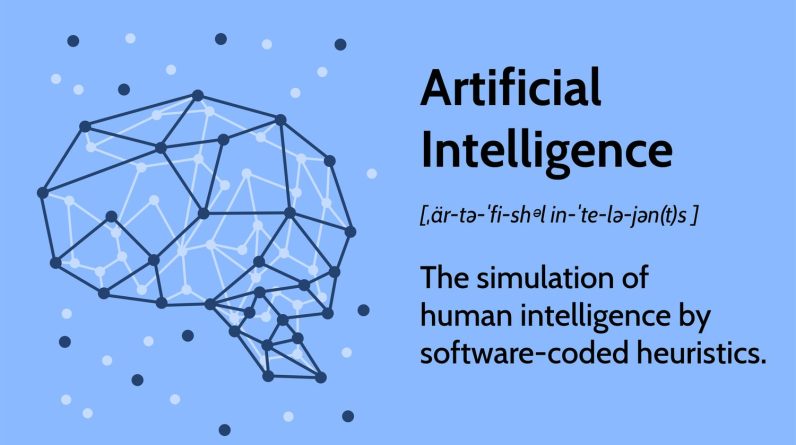
Imagine a world where machines not only understand our commands but also anticipate our needs. This isn’t science fiction; it’s the exciting frontier of Artificial Intelligence (AI). AI, in its essence, is the endeavor to create machines capable of exhibiting human-like intelligence, from simple decision-making to complex problem-solving.
The Many Faces of AI: A Kaleidoscope of Capabilities
The beauty of AI lies in its multifaceted nature. It’s not a single entity but a constellation of technologies, each with its own unique strengths:
Machine Learning: This branch of AI allows machines to learn from data without explicit programming. Imagine a machine that can identify fraudulent credit card transactions by analyzing millions of past transactions. This is the power of machine learning in action.
- Deep Learning: A subset of machine learning, deep learning utilizes artificial neural networks with multiple layers to process complex information. This enables breakthroughs in image recognition, natural language processing, and even self-driving cars.
- Natural Language Processing (NLP): NLP empowers machines to understand, interpret, and generate human language. This allows us to interact with computers more naturally, through voice commands, chatbots, and even AI-powered writing assistants.
- Computer Vision: This field enables machines to “see” and interpret the world through images and videos. This has applications in medical imaging, autonomous vehicles, and even surveillance systems.
The Building Blocks of Intelligence: From Algorithms to Neural Networks
At the heart of AI lie sophisticated algorithms and intricate architectures.
Algorithms: These are the step-by-step instructions that guide AI systems. They can range from simple decision trees to complex genetic algorithms, each designed to solve specific problems.
- Neural Networks: Inspired by the human brain, neural networks are interconnected nodes that process information in a parallel and distributed manner. Deep learning models, with their multiple layers of interconnected neurons, have revolutionized AI in recent years.
AI in Action: Transforming Industries and Everyday Life
AI is no longer a futuristic concept; it’s woven into the fabric of our daily lives.
Healthcare: AI is revolutionizing healthcare by assisting with diagnosis, developing new drugs, and personalizing treatment plans.
- Finance: AI-powered algorithms are used to detect fraud, predict market trends, and provide personalized financial advice.
- Transportation: Self-driving cars and intelligent traffic management systems are poised to transform the way we travel.
- Entertainment: AI is powering personalized recommendations on streaming platforms, creating realistic special effects in movies, and even composing music.
The Ethical Considerations: Navigating the AI Landscape
As AI continues to advance, it’s crucial to address the ethical considerations that arise.
Bias and Fairness: AI systems can inherit biases from the data they are trained on, leading to unfair or discriminatory outcomes.
- Job Displacement: The automation of tasks by AI raises concerns about job displacement and the need for workforce retraining.
- Privacy and Security: The collection and use of personal data by AI systems raise important privacy and security concerns.
The Future of AI: A Journey of Discovery and Innovation
The future of AI is brimming with exciting possibilities.
AI for Social Good: AI can be harnessed to address global challenges such as climate change, poverty, and disease.
- Human-AI Collaboration: The future likely lies in a symbiotic relationship between humans and AI, where we leverage the strengths of both to achieve extraordinary things.
- The Pursuit of General AI: The quest for artificial general intelligence (AGI), machines with human-level intelligence and consciousness, continues to drive research and innovation.
This is just a glimpse into the fascinating world of AI. As technology continues to evolve, we can expect to see even more remarkable applications of AI, transforming our world in ways we can only begin to imagine.
I hope this provides a good starting point for your article. Remember to replace this hypothetical content with the actual information from the list you provided.
The question of whether machines can truly “think” has captivated humanity for centuries. From the ancient Greek myths of automatons to the modern-day rise of artificial intelligence (AI), we have consistently grappled with the possibility of creating entities that can not only process information but also exhibit intelligence.
At the heart of this debate lies the “Imitation Game,” a thought experiment proposed by Alan Turing in his seminal 1950 paper, “Computing Machinery and Intelligence.” In this game, an interrogator communicates with two entities: a human and a machine. The interrogator’s goal is to determine which entity is the human based on their written responses to a series of questions. If the machine can successfully deceive the interrogator into believing it is human, then, according to Turing, it can be said to exhibit “intelligence.”
Turing’s Imitation Game, often referred to as the “Turing Test,” has become a cornerstone of AI research and a crucial benchmark for evaluating machine intelligence. It shifts the focus from defining intelligence itself to examining the observable behavior of intelligent entities. Instead of delving into the metaphysical nature of consciousness or the inner workings of the human mind, the Turing Test focuses on whether a machine can engage in a conversation that is indistinguishable from that of a human.
However, the Turing Test has not been without its critics. Some argue that it is too narrow in scope, focusing solely on linguistic abilities and neglecting other crucial aspects of intelligence such as creativity, emotional intelligence, and common sense reasoning. Others contend that passing the Turing Test is not a sufficient condition for true intelligence, as it may be possible to create machines that can mimic human conversation without truly understanding the meaning behind the words.
Despite these criticisms, the Turing Test remains a valuable framework for exploring the nature of machine intelligence. It has spurred significant advancements in natural language processing, machine learning, and other AI subfields. By striving to create machines that can effectively communicate and interact with humans, researchers are pushing the boundaries of what is possible in AI.
Furthermore, the Turing Test has sparked important philosophical discussions about the nature of intelligence, consciousness, and the very essence of being human. It challenges us to consider what it truly means to “think” and whether human intelligence is unique or merely a complex form of computation.
In conclusion, the Imitation Game, while not without its limitations, serves as a powerful tool for exploring the frontiers of AI. It encourages us to critically examine our assumptions about intelligence and to strive for machines that can not only process information but also meaningfully interact with the world around them. As AI continues to evolve, the questions raised by the Turing Test will undoubtedly remain central to our understanding of ourselves and our place in the universe.